


We’ve all been there, right? One room is freezing while another feels like a sauna. It’s frustrating, and often, it comes down to how air moves through our homes. This article is about looking at ways we can fix those air movement problems, making our living spaces more comfortable and our heating and cooling systems work better. We’ll cover simple vent adjustments, some ductwork care, and a few bigger ideas to get the air flowing right.
Key Takeaways
- Proper vent placement is important for good air movement. We need to think about where supply vents go and make sure return vents can pull air back easily.
- Ductwork needs attention too. Fixing leaks and adding insulation can stop air from getting lost or changing temperature before it reaches us.
- For more control, we can look at whole-house fans or even split our homes into different temperature zones with zoned HVAC systems.
Enhance Your Home Airflow Optimization With Strategic Vent Placement
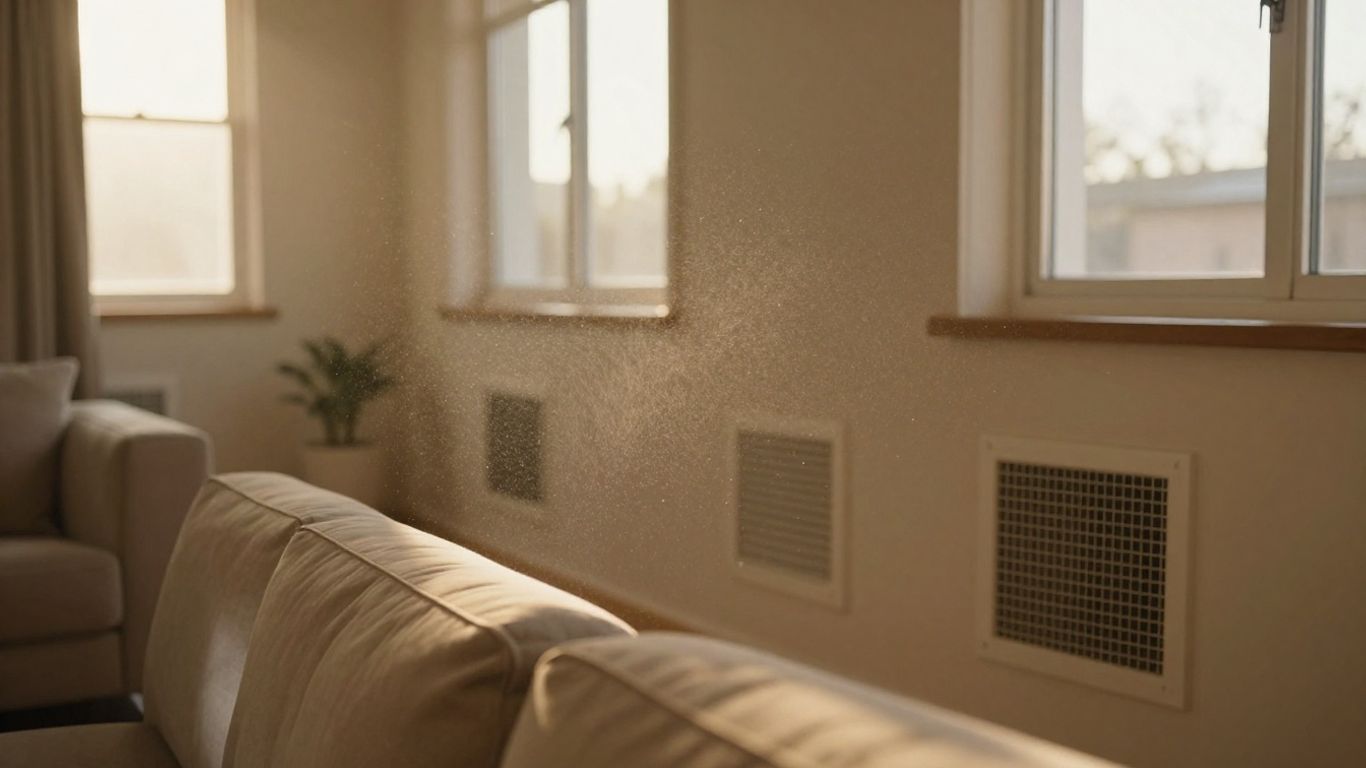
We often overlook the simple things when trying to make our homes more comfortable, but where our vents are placed makes a big difference. Getting the air to move right is key to stopping those annoying hot spots. Let’s look at how we can get our supply and return vents working better.
Optimizing Supply Vent Functionality
Supply vents are where the conditioned air comes into your rooms. If they’re not set up right, the air might just hit a wall or get blocked by furniture. We want that cool or warm air to spread out evenly. Think about where these vents are in relation to where you spend most of your time. A vent blowing directly onto a couch might make that spot too cold in the summer or too hot in the winter, while other parts of the room stay uncomfortable. We need to think about furniture placement and how it affects airflow. Sometimes, just moving a chair or a bookshelf can make a noticeable change.
- Consider the room’s layout: Place vents so air can circulate freely without immediate obstructions.
- Adjust vent direction: Most supply vents have louvers you can adjust. Aim them to push air across the room, not directly at seating areas.
- Avoid blocking: Keep furniture, rugs, and curtains from covering vents. This is a common mistake that really hurts airflow.
- Check for drafts: If a vent seems to be blowing too hard or creating a draft, you might need to adjust the damper inside the vent or even consider if the duct size is appropriate for that room.
Sometimes, the simplest fixes are the most effective. We found that by just repositioning a large floor plant away from a main supply vent, the temperature difference in the living room dropped by several degrees.
Maximizing Return Airflow Efficiency
Return vents are just as important, if not more so, than supply vents. They pull the air back to your HVAC system to be reconditioned. If these are blocked or too small, your system has to work harder, and the air won’t circulate properly. This can lead to stale air and uneven temperatures. We need to make sure these vents have clear paths to the air in your home.
Here are some things to check:
- Clearance is key: Just like supply vents, return vents need space around them. Don’t stack boxes or place furniture directly in front of them.
- Filter maintenance: A dirty air filter is one of the biggest culprits for poor return airflow. We should be checking and changing our filters regularly, usually every 1-3 months depending on the filter type and household conditions.
- Vent size matters: In some older homes, return vents might be undersized for the system. If you’ve upgraded your HVAC or made significant changes to your home, it’s worth checking if your return air capacity is still adequate.
- Location, location, location: Return vents are often placed in central hallways or common areas. Think about how air moves in your home; it naturally flows towards these central points. If they’re blocked, that natural flow is interrupted.
Making sure our return vents are clear and our filters are clean is probably the single most impactful step we can take for better home airflow. It’s a low-cost, high-reward task that directly affects how well our heating and cooling systems work.
Improve Home Airflow Optimization Through Ductwork Maintenance
We often focus on the vents and the main HVAC unit when we talk about airflow, but the network of ducts carrying that air is just as important. Think of them as the highways for your home’s climate control. If these highways have potholes or are poorly maintained, the whole system suffers. We’ve found that neglecting ductwork is a common reason for those annoying hot or cold spots.
Sealing Leaky Duct Connections
Leaky ducts are like having tiny holes in your air delivery system. Conditioned air escapes before it even reaches the rooms it’s supposed to heat or cool. This wastes energy and makes your HVAC system work harder than it needs to. We’ve seen cases where a significant amount of air was lost simply because of loose connections at the vents or where ducts join together.
Here’s how we typically tackle leaky ducts:
- Inspect all accessible ductwork: Look for obvious gaps, tears, or disconnected sections. Pay close attention to joints and bends.
- Use mastic sealant or foil tape: For small leaks, a good quality mastic sealant is often the best bet. For larger connections, heavy-duty foil tape designed for HVAC use works well. Regular duct tape just won’t cut it; it dries out and fails.
- Test the system: After sealing, run your HVAC system and feel for air leaks. You can also use a smoke pencil or incense stick to see where smoke is drawn towards the leaks.
Addressing duct leaks is one of the most cost-effective ways to improve your home’s comfort and reduce energy bills. It’s a task that often gets overlooked, but the payoff is substantial.
Insulating Ducts for Temperature Control
If your ductwork runs through unconditioned spaces like attics, crawl spaces, or garages, it’s vital to insulate it. Without insulation, the air inside your ducts can pick up heat from a hot attic in the summer or lose heat in a cold basement during the winter. This means the air reaching your rooms is already compromised before it even gets there.
We recommend:
- Wrapping ducts with appropriate insulation: Use insulation specifically designed for ductwork, often with a vapor barrier. The R-value needed will depend on your climate and where the ducts are located.
- Ensuring a snug fit: The insulation should fit tightly around the ducts with no gaps. Any air pockets can reduce its effectiveness.
- Checking existing insulation: If your ducts are already insulated, we suggest checking the condition of that insulation. It can degrade over time, get compressed, or be damaged by pests, reducing its ability to keep the air temperature stable.
Advanced Strategies for Home Airflow Optimization
Sometimes, the basic fixes just aren’t enough to get our homes feeling comfortable. We’ve talked about vents and ducts, but what else can we do when hot spots just won’t quit? We can look at some bigger picture stuff.
Utilizing Whole-House Fans Effectively
A whole-house fan is a pretty neat piece of equipment. It’s usually installed in the attic and works by pulling air from inside your house and pushing it out through attic vents. Think of it like a giant exhaust fan for your entire home. When it’s cooler outside than inside, especially in the evenings or early mornings, running this fan can be a game-changer. It quickly replaces the warm indoor air with cooler outdoor air, making the whole house feel more comfortable without running the air conditioner as much. This can lead to noticeable savings on your energy bills.
Here’s a simple way to think about when to use it:
- Check the temperature: If the outside air is cooler than the inside air, it’s a good time to consider using the fan.
- Open windows: For the fan to work best, we need to let the warm air have a way out. Opening windows on the side of the house opposite the fan helps create a good airflow path.
- Don’t run it with the AC: Using the whole-house fan and the air conditioner at the same time is usually counterproductive and wastes energy.
Considering Zoned HVAC Systems
Another approach, if you’re looking at bigger changes or a system upgrade, is a zoned HVAC system. Instead of your entire HVAC system trying to heat or cool the whole house all the time, zoning divides your home into different areas, or ‘zones’. Each zone has its own thermostat, allowing us to control the temperature in specific parts of the house independently. This means we can keep the rooms we use most at a comfortable temperature while reducing heating or cooling in areas that are unoccupied or don’t get as warm. It’s a more precise way to manage comfort and can be quite effective at eliminating those persistent hot or cold spots.
Zoning systems work by using dampers in the ductwork that can open or close to direct airflow. A central control panel manages these dampers based on the thermostat settings in each zone. This allows for much finer control over your home’s climate.
This kind of system requires a bit more upfront investment, but for homes with significant temperature differences between areas, it can really make a difference in comfort and energy use over the long run. It’s definitely something to discuss with an HVAC professional if you’re serious about tackling those tricky hot spots.
Wrapping Up Our Airflow Fixes
So, we’ve gone over a few ways to tackle those annoying hot and cold spots in our homes. It’s not always about a huge renovation; sometimes, simple adjustments to how air moves can make a big difference. We’ve looked at checking vents, sealing leaks, and even thinking about how furniture might be blocking things. Taking these steps can really help make our living spaces more comfortable, room by room. It might take a little effort, but the payoff of a more evenly heated or cooled house is definitely worth it. We hope these tips help you find a more balanced temperature throughout your home.
Frequently Asked Questions
Why do some rooms in our house feel colder or hotter than others?
This often happens because the air isn’t moving around evenly. Think of it like a river; if some parts are blocked, the water doesn’t flow well. In our homes, blocked vents or leaky air ducts can stop warm or cool air from reaching certain areas, leaving them uncomfortable. We can fix this by making sure our vents are placed smartly and our air pathways are clear.
How can we make sure our air conditioning and heating systems work as well as possible?
To get the most out of our heating and cooling, we need to pay attention to the paths the air travels. This means checking that the vents pushing air out (supply vents) are working right and that the vents pulling air back in (return vents) are doing their job efficiently. Keeping these pathways clean and unblocked is key to making sure air circulates properly throughout our entire house.
What are some bigger steps we can take to improve air movement in our entire home?
Beyond just vents, we can look at the big picture. Sometimes, adding a whole-house fan can help pull air through the house, especially on milder days, making it feel fresher. Another idea is to set up ‘zones’ for our heating and cooling. This means we can control the temperature in different parts of the house separately, so we’re not heating or cooling empty rooms as much, saving energy and making sure our main living areas are just right.
